About this case study. Meridian is an illustrative composite and its operating data is modeled, because our client work is confidential. The analysis is real: every number on this page is computed from the underlying dataset. The pattern is one we see in real sponsor-backed acquisitions.
The results, up front
| Measure | At close | Day 100 | Change |
|---|---|---|---|
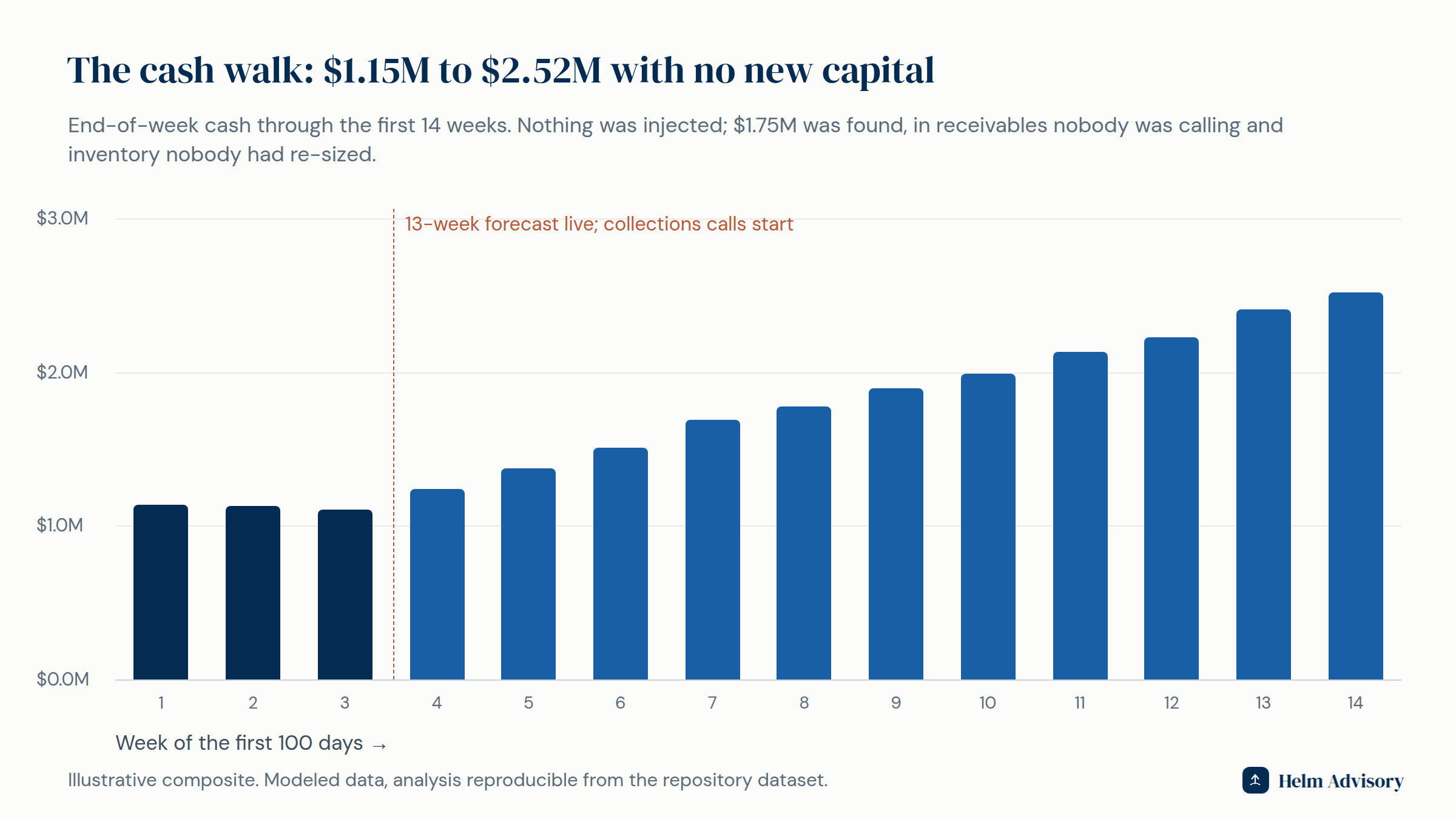
| Cash | $1.15M | $2.52M | +$1.37M, no new capital |
| Cash found (collections + inventory) | n/a | $1.75M | receivables and buys nobody owned |
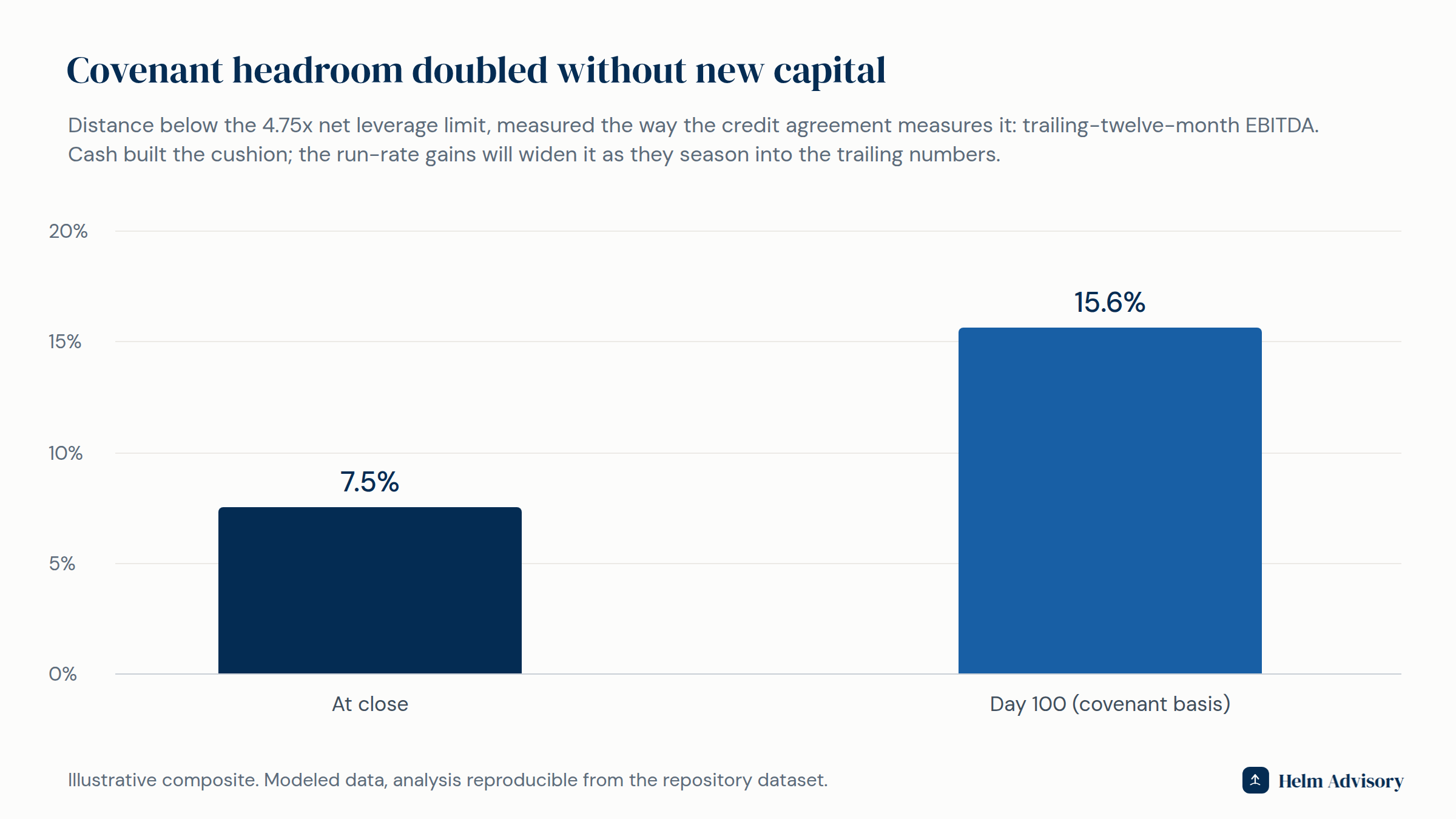
| Covenant headroom (net leverage vs 4.75x limit) | 7.5% | 15.6% | doubled, on the covenant's own math |
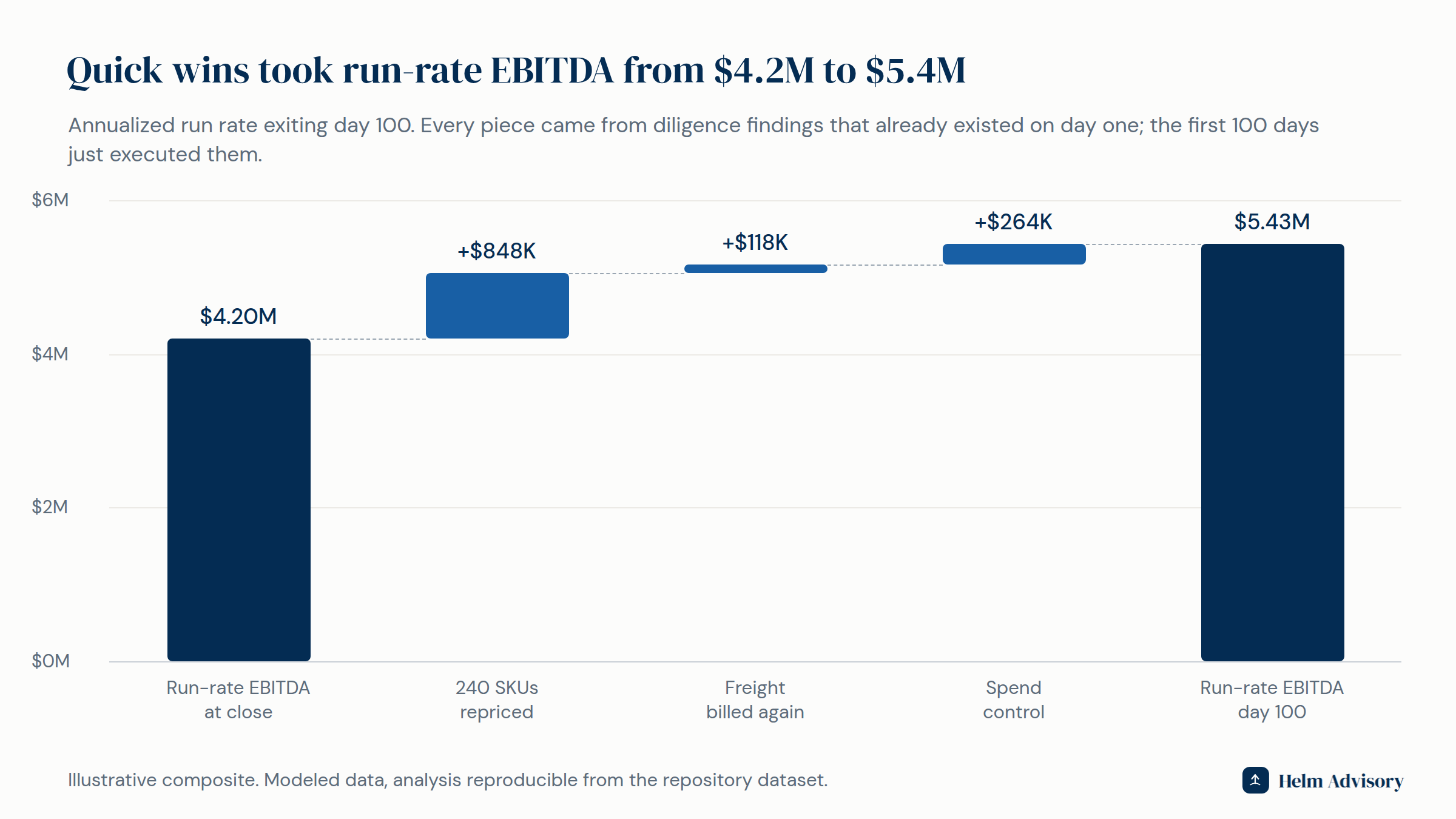
| Run-rate EBITDA | $4.20M | $5.43M | +$1.23M annualized |
| Monthly close | 18 days | 7 days | the sponsor package ships on day 8 |
| 13-week cash forecast | none | live week 3 | the Monday cash call runs since |
The company
Meridian is a sponsor-backed industrial components maker. About $38M in revenue, acquired at roughly 4.4x net leverage against a 4.75x covenant. A good business with real customers and real margins, run for years on the owner's feel for it.
The symptom
The wire clears and the operating reality arrives. No weekly cash visibility. A monthly close that lands on day 18, which means the sponsor's first board deck is built on numbers nobody fully trusts. Receivables that drifted through diligence because nobody was calling. And 7.5% of covenant headroom, which is one bad quarter.
The first 100 days were not about strategy. They were about standing up the operating disciplines the leverage now demands.
What changed, in order
- Cash first. A 13-week cash forecast live in week 3, with a Monday cash call that takes 30 minutes. Collections calls started the same week; the AR aging had names on it by Friday. $1.35M of receivables worked down over the hundred days, plus $394K of inventory buys deferred or re-sized once someone actually looked.
- The pricing that diligence already found. 240 catalog SKUs, about half the book, had not been repriced since 2023. A 3% to 6% correction went effective in week 9. Small-order freight, contractually billable and habitually waived, went back on invoices. Together: $966K of annualized margin that required no negotiation beyond sending the letters.
- Spend got an owner. Purchase approvals above a threshold, duplicate vendors consolidated out of the AP file, $264K a year verified line by line.
- The reporting rhythm. Close compressed from 18 days to 7 by fixing the three slowest inputs, and the board pack now ships on day 8 with a rolling forecast in it. Sponsors do not fund surprises twice.
The covenant view
Headroom is measured the way the credit agreement measures it, on trailing-twelve-month EBITDA, so the pricing gains had not yet seasoned into the covenant math by day 100. The cushion still doubled, from 7.5% to 15.6%, because the cash build cut net debt directly. On a run-rate basis leverage sits near 3.1x, and each passing quarter moves the covenant view toward it. The headroom discipline now runs quarterly, two quarters forward.
Why this is the playbook
None of this required a strategy offsite. The first 100 days of a leveraged deal are an execution problem with a deadline: the cash discipline because leverage removes the margin for surprise, the quick wins because they fund credibility, the reporting rhythm because the sponsor's trust is the real working capital. The operating work and the value-creation plan are the same work, and it is exactly what we do for sponsor-backed companies.
Just closed, or about to? Start a conversation. The first hundred days only happen once.
Methodology: modeled weekly cash, receivables, SKU pricing, and covenant data. All figures computed from the dataset; the run-rate bridge reconciles. Composite prepared so the mechanics can be shown with a specificity confidential client work does not allow.